 The Function
 What Fascia Does and Why Its Failure Is Costly
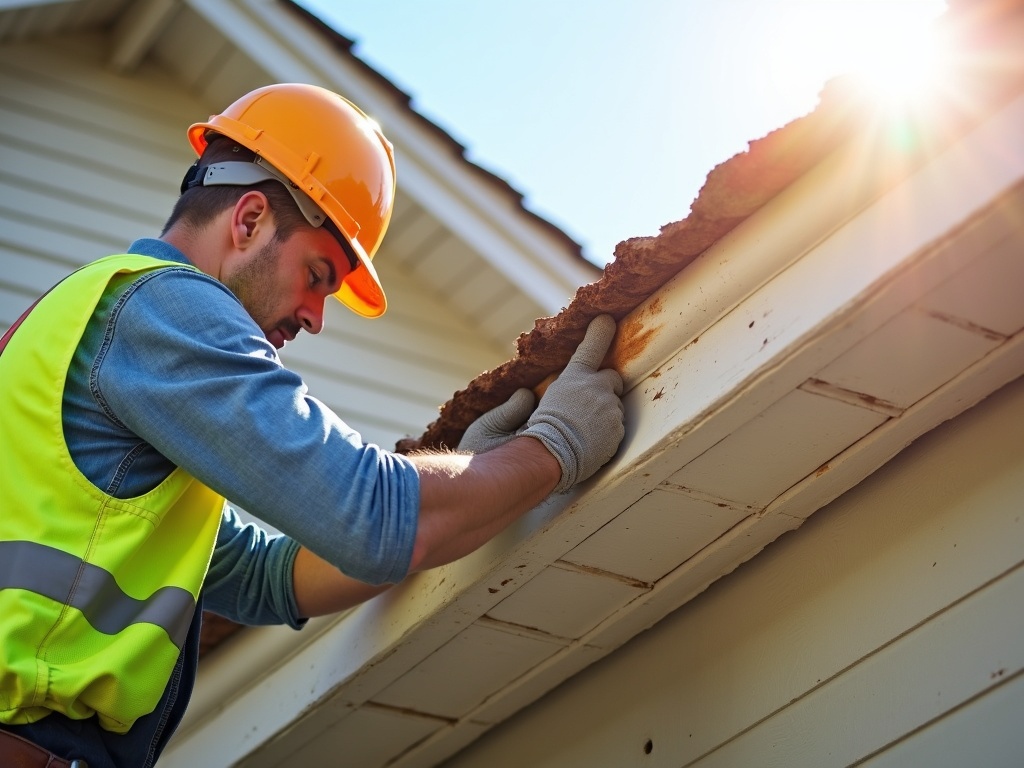
Fascia is the vertical board running along the lower edge of your roofline — the piece that spans the length of your eaves and faces outward. It's what your gutters physically attach to, and it protects the exposed ends of your roof rafters from direct weather exposure.
In practical terms, fascia is the structural anchor of your gutter system. Every gutter screw, spike, or hanger drives into this board. When the board is healthy, the gutters stay where they're installed. When the board rots — which Georgia's humidity and gutter overflow accelerate aggressively — the gutter attachment fails. Screws pull out. Gutters sag, pull away from the fascia, or detach at corners. And the moisture that overflowing gutters have been concentrating against the board keeps accelerating the deterioration.
Left long enough, active fascia rot reaches the rafter tails behind the board. At that point you're no longer talking about a $500 board replacement — you're looking at structural framing work that can run four to eight times that figure. The window for a straightforward fascia repair is limited once moisture gets behind the board.
How Georgia's Climate Attacks Fascia
Georgia's combination of heavy rainfall, high summer humidity, and year-round warm temperatures creates ideal conditions for wood rot. Fascia boards in Georgia face specific threats that compound each other:
- Clogged gutters that overflow onto the fascia — Georgia's tree canopy (oaks, pines, sweetgums) fills gutters faster than most homeowners clean them, directing roof runoff straight down the fascia face
- Summertime humidity maintaining constant board moisture — even well-painted fascia in Georgia absorbs enough ambient humidity to sustain rot over time, especially at end-grain exposure
- Storm damage to gutter attachment points — Georgia's severe thunderstorm season regularly dislodges gutter sections, creating gaps where water funnels directly against the board
- Deferred maintenance cycles on aging housing stock — many Georgia neighborhoods built between 1975 and 1995 have original wood fascia that hasn't been painted or inspected in a decade or more
Warning Signs Your Fascia Needs Professional Attention
- Gutters visibly pulling away from the roofline — the most reliable indicator of rotted fascia; the board can no longer hold the fasteners
- Cracked, peeling, or bubbling paint on the fascia face — surface paint failure is usually the first visible sign of moisture working through the wood
- Dark staining or greenish discoloration along the board face — indicates algae or mold growth, which requires sustained moisture to establish
- Soft or spongey board when pressed — the board has rotted through; replacement, not painting, is required at this stage
- Interior ceiling stains appearing near the top of exterior walls — active fascia rot often means moisture is reaching your wall cavity and running down to ceiling level
Fascia Repair Cost in Georgia
| Job Type | Typical Range (Georgia) |
|---|---|
| Short section replacement (5–12 feet) | $300–$650 |
| Full run one side of home (30–50 LF) | $900–$2,200 |
| Full perimeter replacement | $2,400–$5,500 |
| Add: aluminum wrap (no repainting needed) | + $200–$600 |
| Add: rafter tail repair | + $400–$1,200 |
Note: These ranges reflect current Georgia market rates. Two-story homes and difficult ladder access add to labor cost. Your estimate is always free, in-person, and itemized.